Carbon Hydrocarbon Solvent Recovery Unit Analysis
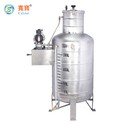
A hydrocarbon solvent recovery unit is an environmental protection device designed to treat industrial cleaning wastewater. Its core value lies in purifying and regenerating used, contaminated hydrocarbon solvents for reuse. The system heats and distills the waste liquid under vacuum or atmospheric pressure, exploiting the significant difference in boiling points between the hydrocarbon solvent and its contaminants (such as oil residues and metal shavings), thereby separating pure solvent vapor, which is then condensed and recovered.
Core Working Principle: Distillation and Purification
The fundamental principle of this equipment is distillation, with the following steps:
Pre-treatment Filtration: Used solvent first passes through a precision filter to remove solid impurities (such as metal powders and abrasive particles), preventing clogging of downstream equipment.
Heating and Distillation: After pre-treatment, the waste liquid enters the distillation vessel and is heated. Hydrocarbon solvents have relatively low boiling points (typically 150–250°C) and thus vaporize first, while high-boiling-point contaminants such as oil residues and resins remain at the bottom as residue.
Atmospheric Pressure Distillation: Suitable for low-boiling-point solvents, where direct heating to the boiling point is applied.
Vacuum (Reduced Pressure) Distillation: By creating a vacuum to lower the internal pressure, the boiling point of the solvent is reduced (e.g., at a vacuum level of 0.08 MPa, the boiling point can drop by 30–50°C). This is currently the mainstream technology, offering advantages such as greater energy efficiency, enhanced safety, and prevention of solvent decomposition at high temperatures.
Condensation and Recovery: The generated solvent vapor enters a condenser, exchanges heat with a cooling medium, and re-liquifies into pure hydrocarbon solvent, which is collected in storage tanks for reuse.
Residue Discharge: When residual material accumulates to a certain level, heating is stopped and the residue is discharged.
Additionally, some advanced units incorporate a rectification column to achieve higher solvent purity (over 95%) through multiple cycles of vaporization and condensation.
Key Technologies and Design Considerations
To ensure efficient and safe operation, several critical design aspects are considered:
Precise Temperature Control and Vacuum System: A PID temperature control system continuously monitors temperature, while vacuum pumps maintain stable vacuum levels (e.g., 0.07–0.09 MPa). High-end models may also include remote intelligent wireless monitoring modules.
Multi-layer Explosion-Proof Safety Design: Since hydrocarbon solvents are flammable, the equipment must use explosion-proof electrical components, install combustible gas detectors and over-temperature alarms, and employ nitrogen sealing to isolate from air.
Efficient Heating and Condensing Systems: Heating methods include direct electric heating elements or safer indirect heating via thermal oil. The condenser must provide sufficient heat transfer area to ensure that the cooling medium remains at least 20°C below the solvent's boiling point.
Energy-Saving Optimization: Energy consumption is reduced through waste heat recovery systems (e.g., using heat from condensate to preheat waste solvent) or more energy-efficient vacuum distillation techniques. Some designs also utilize high-temperature steam to supply heat to other process stages.