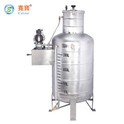
Dichloromethane waste liquid distillation recovery unit
A dichloromethane recovery unit is an environmental protection device specifically designed for recovering dichloromethane solvent. Its core value lies in environmental compliance and resource reuse: it not only prevents toxic dichloromethane emissions from being released into the atmosphere, but also purifies waste solvent for reuse, helping enterprises reduce procurement costs.
Waste Liquid Distillation and Recovery Type
This type of equipment is primarily designed for industrial use, targeting used liquid dichloromethane waste containing impurities such as oil stains, solid particles, resins, etc.
1. Working Principle: Vacuum Distillation
The core principle relies on the low boiling point of dichloromethane (approximately 39.8°C). Under vacuum and negative pressure, the boiling point of dichloromethane is further reduced. The equipment heats the waste liquid to vaporize the dichloromethane, which is then condensed back into clean liquid through a condensation system, while impurities remain as concentrated residue in the container and are periodically removed.
2. Key Performance Parameters
Taking a common 500-liter large-scale recycling machine available on the market as an example:
Processing capacity: up to 500 liters per batch.
Recovery efficiency: up to 98%, meaning approximately 98 liters of pure dichloromethane can be recovered for every 100 liters of waste liquid processed.
Processing time: approximately 2.5 to 3 hours per batch.
Heating method: Indirect heating using thermal oil, providing more uniform and safer temperature control.
Slag discharge method: Large-scale equipment is typically equipped with pneumatic automatic slag discharge, facilitating the removal of residual solid waste.
Safety Design: Explosion-proof certified (ExdIIBT2), equipped with multiple temperature and pressure protection devices.
3. Application Scenarios
Widely used in automotive manufacturing, electronics production, precision instrument cleaning, coatings and chemicals, printing, and other industries for recovering waste solvents generated after cleaning molds, equipment, or products.