I. Common Solvents in the Sports Equipment Manufacturing Industry and Their Sources
Composite material molding (such as carbon fiber bicycle frames, golf clubs, tennis rackets):
Solvent types: acetone, methyl ethyl ketone (MEK), dimethylformamide (DMF), ethyl acetate, etc. Mainly used for resin dilution, mold cleaning, and component washing.
Source: Wiping cloths during the production process, cleaning containers, cleaning of spraying equipment, and volatilization from curing ovens.
Surface coating and spraying (such as bicycle frames, fitness equipment shells):
Solvent type: Thinner (banana water, mainly composed of toluene, xylene, esters, ketones), paint thinner (containing alcohols, esters, ketones).
Source: Exhaust gas from spray booths, cleaning of spray guns, and evaporation during paint mixing.
Metal/plastic parts cleaning and degreasing:
Solvent type: Chlorinated solvents (such as trichloroethylene), hydrocarbon solvents, IPA (isopropyl alcohol), etc.
Source: Volatile exhaust gas and waste cleaning liquid from the cleaning machine.
II. Applicable solvent recovery technologies and equipment selection
The core basis for choosing equipment: solvent characteristics, exhaust gas concentration, air volume, recovery value, and environmental protection requirements.
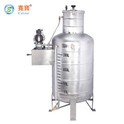
Activated carbon adsorption recovery device (the most commonly used and mature)
Principle: Organic waste gas passes through the activated carbon bed, and the solvent is adsorbed; when the activated carbon is saturated, it is desorbed with high-temperature steam to form a mixed steam, which is then condensed, separated, and the liquid solvent is recovered.
Applicable scenarios:
Waste gas with medium-low air volume and medium-high concentration.
Suitable for ketones (acetone, MEK), esters, benzene series (toluene, xylene) and other condensable organic solvents.
Tail gas treatment of the coating line and centralized exhaust gas treatment in the workshop for the sports equipment manufacturing industry.
Advantages: High recovery purity (up to over 95%), obvious economic benefits, and mature technology.
Disadvantage: It is not suitable for handling solvents with high boiling points, those prone to polymerization, or those that are immiscible with water and difficult to separate.
2. Nitrogen desorption type activated carbon recovery device
Principle: Inert gas (nitrogen) is used to replace steam for desorption. The high-concentration gas desorbed is recovered after condensation.
Applicable scenarios:
Recover solvents that react with water, undergo hydrolysis or are difficult to separate (such as DMF, certain special esters).
The purity of the recovered solvent is required to be extremely high to avoid water pollution.
Advantages: The recovered solvent is of excellent quality with no water mixed in and can be reused directly.
Disadvantage: The equipment investment and operating costs (nitrogen consumption) are relatively high.
3. Condensation Recovery Device
Principle: The waste gas is directly deeply cooled (even to below -70℃), causing the solvent vapor to liquefy and be recovered.
Applicable scenarios:
Exhaust gas with extremely high concentration and low air volume, such as that from cleaning machines and filling processes.
Suitable for solvents with high boiling points.
Advantages: Direct process, pure recovered liquid.
Disadvantages: High energy consumption and uneconomical for low-concentration waste gas.
4. Membrane separation recovery device
Principle: By taking advantage of the selective permeability of special high-molecular membranes to organic vapors, the separation and concentration of solvents are achieved.
Typical application scenarios: It is usually used as a pre-concentration device and is combined with adsorption or condensation equipment to treat large volumes of low-concentration waste gas.
Advantages: Continuous operation without secondary pollution.
Disadvantages: It is difficult to achieve a high recovery rate when used alone, and the investment cost is high.