The working process and core technology of solvent recovery machines in the electronics industry
I. Why does the electronics industry urgently need solvent recovery machines?
Large usage and high value of solvents: Electronic-grade solvents (such as IPA, acetone, NMP, PGMEA, PGME, etc.) have extremely high purity requirements (usually ≥ 99.99%) and are very expensive. During processes like lithography, cleaning, and stripping, a large amount of waste solvents containing impurities such as photoresist, resin, and metal ions are generated.
Environmental protection regulations are becoming increasingly strict: waste solvents are classified as hazardous waste (HW06), and their treatment, transportation and disposal are subject to strict supervision. The disposal cost is high and there are environmental risks.
Enhancing supply chain security: On-site solvent recovery and recycling can reduce reliance on upstream raw material suppliers and ensure production continuity.
Corporate Social Responsibility and Image: Promoting green manufacturing and circular economy is a crucial aspect of a company's ESG (Environmental, Social, and Governance) performance, which helps enhance its brand image.
II. Working Process and Core Technology of Solvent Recovery Machines
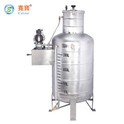
Modern solvent recovery machines used in the electronics industry typically employ precision distillation technology. The process is as follows:
Waste liquid collection and pretreatment: Waste solvents generated from each process are collected centrally and may first undergo simple filtration to remove particulate matter and large molecular polymers.
Feeding and heating: The waste solvent is pumped into the distillation pot and heated by electric heating or indirect heating with heat transfer oil to avoid local overheating.
Distillation separation: This is the core step.
Evaporation: Waste solvents are heated and evaporate, forming vapor.
Distillation: Steam enters the distillation column and comes into full contact with the packing or trays inside the column, undergoing multiple partial vaporizations and partial condensations. Pure solvent vapor with a lower boiling point rises, while impurities with a higher boiling point, such as photoresist residues and pigments, which are less volatile, reflux to the bottom of the column.
Condensation collection: The rising pure solvent vapor is cooled in the condenser and re-liquefied into high-purity liquid.
Impurity discharge: The viscous or solid impurities (hazardous waste) remaining at the bottom of the reactor are discharged, with a volume of only 5% to 20% of the original waste liquid, significantly reducing the cost of hazardous waste treatment.
Technical feature requirements:
High-precision temperature control: Ensures effective separation of solvent components and prevents decomposition.
System-wide anti-corrosion: To address the potential presence of acidic impurities, key components are made of corrosion-resistant materials such as stainless steel and titanium.
High vacuum: lowers the boiling point and prevents heat-sensitive solvents from deteriorating at high temperatures.
Automation control: PLC touch screen control, enabling one-button operation, recording operation data, and facilitating quality traceability.