1. What is thinner
Thinner is a solvent for diluting ink or paint.
When the ink is dry, it affects the effect of the pattern, especially the smoothness and shade.
Used to reduce the viscosity of the adhesive, so that the adhesive has good penetration, improve the process performance, some can reduce the activity of the adhesive, so as to prolong the service life of the adhesive compound.
In order to facilitate gluing, diluents are often used to dissolve the adhesive and adjust the desired viscosity.
The main components of thinners are toluene (about 20%) and xylene (about 20%) and other solvents (about 60%).
The main ingredients of thinners are originally isophorone and petroleum ether, but now the meaning of thinner is becoming more and more extensive, can thin the inks is called the thinner, silk screen thinners, spray thinners and so on, now many manufacturers in order to reduce the cost, add some toluene, xylene and trimethylbenzene in thinners, etc.,
Make the nature of thinner become not environmental protection and even affect the quality of inks.
This kind of release of thinner into the air has certain harm to the human body, often cause some allergic reactions to the respiratory tract, generally leave such an environment can be improved health.
In fact the greatest harm is if people in such an environment for a long time may cause some malignant tumor diseases, so called on manufacturers to abide by the principle of producing good thinner, but also recommended not to place with such an environment for a long time, if can't change the work environment, some appropriate methods can be used for their protection, be sure to ensure the safety of the life of their own.

2. The role/use of thinner
1). Paint dilution and cleaning;
2). spray paint, varnish and neoprene thinner;
3). Spray gun cleaning and pipeline cleaning for shell spraying part in industrial manufacturing process;
4). open dilute paint, paint dilution and tools to clean;
5). glue thinner;
6). Clean all kinds of hardware molds.
Diluents can be divided into inactive diluents and active diluents.
1). inactive diluent this diluent molecules do not contain active groups, mostly inert solvents, such as ethanol, acetone, toluene, etc..
It does not participate in the reaction during the dilution process, but only blends into the resin and serves the purpose of reducing viscosity.
In addition to the dilution effect, it has an impact on mechanical properties, thermal deformation temperature, medium resistance and aging damage.
The volatile rate of solvent should be taken into account. If the volatile rate is too fast, the surface of the adhesive layer is easy to form a film, which prevents the escape of the solvent inside the adhesive layer.
Lead to bubbles in the rubber layer;
If the volatilization rate is too slow, the solvent is left in the adhesive layer, which will affect the bonding strength.
Several solvents with different boiling points are usually mixed to regulate the rate of evaporation.
It is widely used in rubber adhesive, phenolic adhesive, polyester adhesive and epoxy adhesive.
2). Active diluent Active diluent is a diluent containing active group in the molecule.
It in the process of diluting adhesive to participate in the reaction, but also play a toughening effect (such as adding glycerin epoxy resin or epoxy propane butyl ether in the epoxy adhesive can play a toughening effect).
Active diluents are mostly used in epoxy adhesives, but less used in other types.

3. The non return and protection of thinner
Liquid invasion way inhalation, ingestion, percutaneous absorption of health hazards to the skin, mucous membrane stimulation, sensitization.
Environmental hazards This substance is harmful to the environment and special attention should be paid to the pollution of water bodies.
This product is flammable, storage, use should be far away from the source of fire to avoid direct sunlight, not used products, barrel cover closed, in order to avoid solvent volatilization.
Four, the recovery of thinner
Because open thinner is a mixed liquid, it can be recycled according to the boiling point.
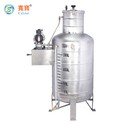
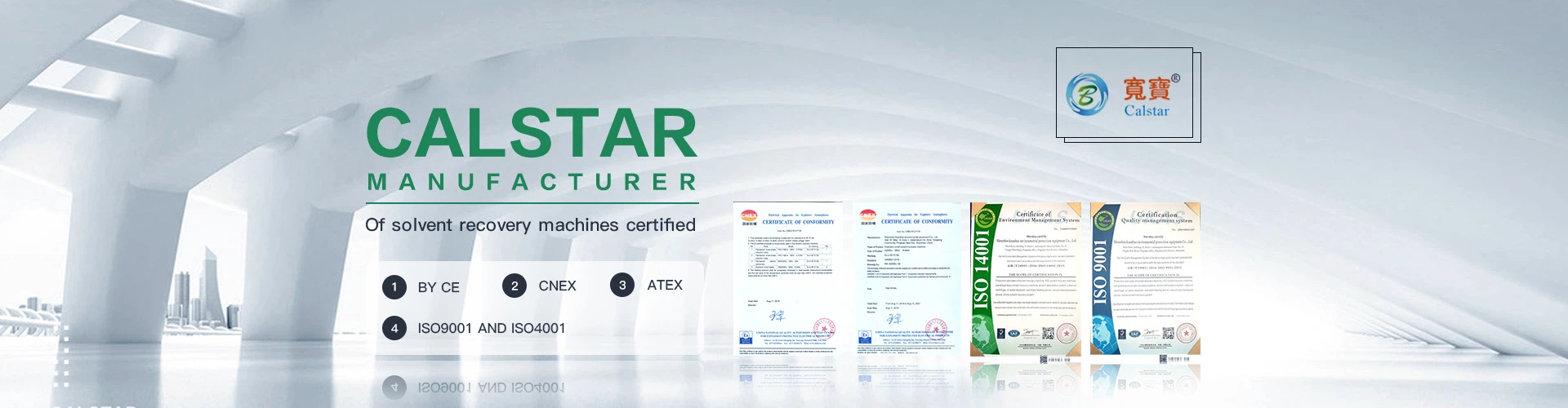
Kuanbao Environmental protection Equipment Co., LTD., 27 years of professional solvent recovery equipment r&d and manufacturing.