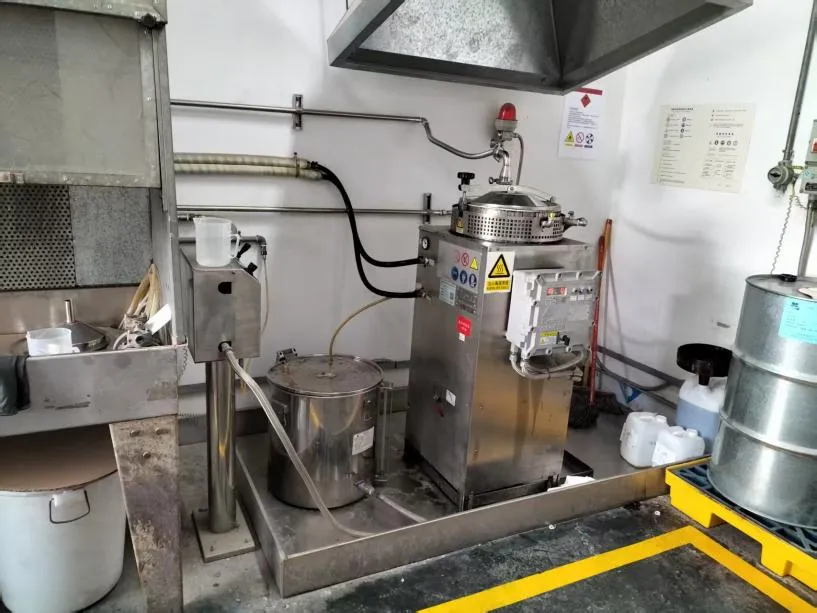
Common organic solvents such as toluene, xylene, ethyl acetate, acetone, methyl ethyl ketone, and thinner are used for adhesive dilution. The resulting waste liquid contains resin and adhesive residues. Hazardous waste disposal is costly and subject to strict environmental regulations. Recovery machines rely on distillation for purification, achieving a recovery rate of 90% to 98%. The recovered solvent, with a purity of 99%, can be directly reused for adhesive dilution and equipment cleaning.
1. Reduce production costs and significantly cut raw material expenses
Reduce new solvent procurement by 75% to 90%: Purified waste dilution solvent is recycled for 3 to 5 cycles, requiring only 10% to 25% of lost material to be replenished. Medium and small rubber factories can save 60,000 to 100,000 yuan monthly on solvent purchases.
2. Cutting High-Cost Hazardous Waste Disposal Fees: Diluted waste glue liquid falls under high-risk hazardous organic solvents, with external disposal costs ranging from 2,500 to 4,000 yuan per ton. After recycling, the waste liquid volume is reduced by over 85%, leaving only a small amount of viscous glue residue. This results in a sharp 70% to 90% reduction in hazardous waste requiring external disposal.
3. Extremely low operating costs and rapid payback: The combined cost of electricity recycling and maintenance is only 10% to 20% of the unit price of new solvents. Most adhesive factories recover their equipment investment within 6 to 12 months, achieving pure profits year-round thereafter.
II. Environmental Compliance, Avoiding Penalties and Hassles with Environmental Assessments
1. Significantly reduce VOC and hazardous waste emissions: Eliminate the illegal dumping of waste dilution fluids and the storage in seepage pits, minimizing pollution of wastewater, soil, and air at the source to meet environmental impact assessments, pollutant discharge verification, and dual carbon control requirements.
2. Avoid Environmental Penalties: The adhesive industry is a key category under environmental inspection. Improper disposal of waste liquid may result in fines ranging from tens of thousands to production halts. On-site recycling and closed-loop production help mitigate enforcement risks.
3. Simplification of Hazardous Waste Ledger: The generation of hazardous waste has significantly decreased, halving the workload for ledger reporting and annual environmental audits.
3. Stabilize glue quality and optimize production control
The recycled solvent meets purity standards: Distilled to separate gel residues and impurities, the purified solvent's physical and chemical properties are close to those of new products, ensuring no quality issues such as abnormal viscosity, whitening, or reduced adhesion when used to dilute glue.
2. Controllable raw material quality: No need to frequently switch batches of purchased diluents, reducing instability in adhesive formulations and batch defects caused by fluctuations in new solvent supply.
3. Reduce pipeline blockages: High-purity recycled solvents clean the stirring tank and conveying pipelines, reducing adhesive residue buildup and decreasing equipment maintenance frequency.
4. Enhance workplace safety and eliminate potential hazards
1. Explosion-proof model sealed distillation: Fully enclosed negative pressure heating eliminates the risk of volatile flammable and explosive VOCs from open storage of waste diluent, removing workshop flash explosion hazards and complying with chemical fire safety standards.
2. Centralized Enclosed Treatment of Waste Liquids: Eliminate the need for open-air storage of waste glue and liquid in large iron drums, reducing risks of leakage, spillage, and solvent poisoning for personnel, while improving workshop working conditions.
3. Replace traditional distillation/combustion methods: Eliminate the significant safety hazards associated with small-scale open-fire waste liquid distillation.
V. Additional Hidden Benefits
1. Warehouse Burden Reduction: Eliminate bulk storage of new diluent solvents and waste liquid accumulation, freeing up warehouse space.
2. Enhance corporate qualifications: Circular production can be utilized for high-tech and green factory applications, as well as to earn points in bidding processes.
3. Waste valorization: Small amounts of distillation residues can be profitably disposed of by qualified entities, generating additional revenue.