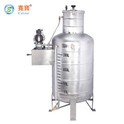
The use of alcohol gas recovery machines in the plastic industry has significant economic, environmental, and safety benefits.
1, Core economic benefits: directly reducing costs and increasing profits
1. Solvent recycling significantly reduces procurement costs:
·In plastic processing, many processes such as cleaning, modification, printing, and coating use large amounts of organic solvents such as alcohol, acetone, and toluene. These solvents usually evaporate into exhaust gas after use.
·The recycling machine uses condensation and other technologies to liquefy and recycle these gaseous alcohols (solvents), with a recovery rate typically reaching 80% -95%. This means that companies can significantly reduce their procurement of new solvents, directly resulting in significant cost savings.
2. Reduce the cost of hazardous waste treatment:
·If not recycled, waste liquids and activated carbon that have adsorbed solvents are considered hazardous waste, and their disposal costs are very high.
·After using the recycling machine, the effective solvents in the waste liquid are extracted, and the remaining residue is significantly reduced, thereby significantly reducing the amount of hazardous waste disposal and related costs.
3. Potential carbon trading benefits:
·With the promotion of the "dual carbon" policy, reducing VOCs emissions is equivalent to reducing carbon emissions. Enterprises can convert emission reductions into actual economic benefits through the carbon trading market.
2, Important Safety and Health Benefits: Ensuring Production and Personnel Safety
1. Reduce security risks:
·Organic solvents such as alcohol vapor can easily form explosive gases when mixed with air, posing a significant safety hazard.
·The recycling machine greatly reduces the concentration of combustible gases in the workshop by continuously collecting and processing these gases, fundamentally eliminating the hidden dangers of explosions and fires, and ensuring the safety of personnel and equipment.
2. Improve the working environment and protect the health of employees:
·Volatile solvent gases are mostly harmful to the human body, and long-term inhalation can damage the nervous system, respiratory system, etc.
·The use of recycling machines can significantly reduce odors and toxic gas concentrations in the workshop, create a healthier and more comfortable working environment for employees, help reduce the occurrence of occupational diseases, and improve employee satisfaction and work efficiency.
3, Enhance operational and management capabilities
1. Implement closed-loop solvent management:
·Establishing a closed-loop system of "procurement use recycling reuse" has made solvent management traceable and quantifiable, enhancing the level of refinement and intelligence in production management.
2. Ensure production stability:
·Avoiding the risk of production stoppage caused by environmental non-compliance and reducing absolute dependence on external supply chains for fresh solvents, production and operation are more stable and controllable.
For the plastic industry, investing in alcohol gas recycling machines is not just a "cost item" to cope with environmental inspections, but a strategic investment with high returns. It can:
·Save money: Directly reduce raw material costs and hazardous waste disposal fees.
·Compliance: Easily comply with environmental regulations and avoid policy risks.
·Safety: Eliminate major safety hazards and ensure the health of personnel.
·Image: Build a green brand and enhance market competitiveness.
Therefore, against the backdrop of increasingly stringent environmental requirements and intensified market competition, adopting solvent recycling technology has become an inevitable choice for plastic companies to achieve sustainable development.