1. Direct cost reduction, significantly cutting procurement costs
Recycling and Reusing IPA Solution
The waste IPA from cleaning, wiping, electronic component cleaning, SMT flux cleaning, and optical lens cleaning can be distilled and purified to restore its purity to 95%~99.5%, meeting the production reuse standards and replacing the need for new procurement. The single recovery rate typically ranges from 85%~95%.
For example, with a daily IPA consumption of 200L and a recovery rate of 90%, only 20L of new solvent needs to be replenished daily, resulting in a long-term procurement volume reduction of 80% to 90%.
2. Hazardous waste disposal costs plummeted
Waste IPA is classified as an inflammable hazardous chemical, with extremely high costs for outsourced disposal. After recycling, only a small amount of residual waste liquid remains, reducing hazardous waste production by over 90%. This also simultaneously lowers risks related to transportation, qualification handling, and environmental fines.
2. Stabilize production quality and ensure consistent cleaning effectiveness
The solvent purity is controllable after purification
The recycling machine removes oil stains, dust, flux residues, and moisture introduced during cleaning through temperature-controlled distillation and condensation separation. It ensures stable IPA cleanliness, preventing issues such as reduced cleaning efficiency, whitening, water stains, and poor oxidation of components that occur when waste solvents are repeatedly mixed and used directly.
2. Adapting to High-Precision Scenario Requirements
Semiconductors, PCBs, lens modules, mobile phone cover plates, and optical glass cleaning require stringent control over IPA water content and impurity levels. Closed-loop recycling ensures stable solvent quality, preventing batch rework caused by fluctuations in raw material quality from new batches.
3. Work Safety: Reducing Workshop Fire and Compliance Risks
1. Closed-loop recycling to minimize volatilization and leakage
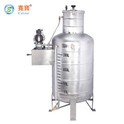
In open immersion and wiping processes, IPA is highly volatile, leading to solvent loss and the formation of flammable and explosive vapors. The recovery machine employs fully enclosed distillation and condensation, minimizing volatile loss, significantly reducing VOC concentrations in the workshop, and enhancing explosion-proof safety levels.
2. Reduce the stock of bulk solvents
There is no need to stockpile large quantities of original IPA raw materials, reducing the hazardous chemical storage volume in workshops, lowering the pressure of fire safety inspections and safety supervision inspections, and mitigating fire and explosion hazards caused by the accumulation of flammable solvents.
4. Environmental Compliance, Meeting Emission and Environmental Assessment Requirements
Reduce VOC emissions
The emission of volatile organic compounds from isopropanol is strictly controlled by environmental regulations. Recycling significantly reduces solvent evaporation and emissions, ensuring compliance with local air pollutant discharge standards and avoiding production restrictions, rectification measures, or administrative penalties.
V. Additional Management and Comprehensive Returns
1. Simplified Inventory Management
There is no need for frequent bulk procurement, warehousing, and inventory counting of IPA, which reduces capital occupation and improves the utilization of working capital.
2. Adapt to continuous mass production
Large production lines can be equipped with continuous recycling machines, enabling simultaneous production and recycling to ensure uninterrupted supply to cleaning stations without disrupting the assembly line pace.
3. Residual Value Guarantee
A small amount of highly contaminated residue that cannot be purified can be disposed of in compliance with regulations, with an overall comprehensive cost significantly lower than the combined model of continuous external procurement plus high-cost hazardous waste treatment.