A Guide to Selecting Waste Hydrocarbon Solvent Recovery Equipment
Key components
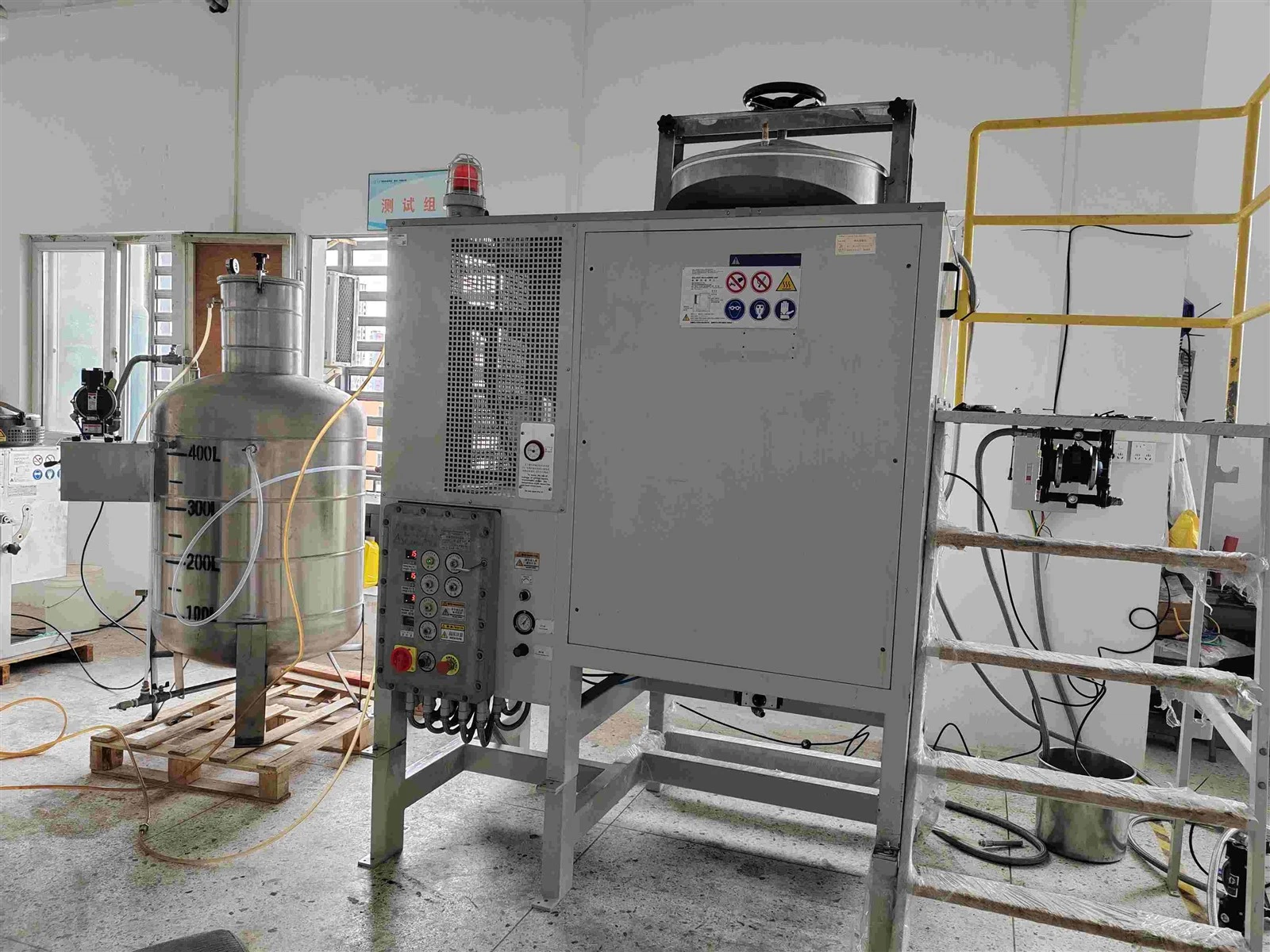
A complete set of recycling equipment usually includes:
Distillation kettle: The main container for heating and evaporation.
Heating system: Electric heating rods, steam coils or heat transfer oil jackets.
Condenser: A tubular or coil heat exchanger used for cooling steam.
Cooling system: Cooling water tower or chiller, providing a cold source for the condenser.
Vacuum system (if vacuum type): Vacuum pump and related components.
Automatic control system: PLC, temperature/pressure sensors, automatic valves, etc., are used to control the entire process to ensure safe and stable operation.
Collection tank: Stores recycled solvents.
Application Industries
Waste hydrocarbon solvent recovery equipment is widely used in industries that generate large amounts of waste solvents:
Paint and ink industry: Waste solvents containing pigments and resins generated from cleaning equipment.
Printing industry: Cleaning solvents for printing machines and rollers.
Electronic industry: Waste solvents from cleaning PCB boards and components.
Chemical and pharmaceutical industries: Waste solvents generated from reaction processes and extraction processes.
Metal processing industry: Waste cleaning agents from processes such as cleaning and degreasing of hardware parts.
Advantages of investing in recycling equipment
Huge economic benefits:
Significantly reduce procurement costs: The recovery rate is usually 80% - 95%, greatly reducing the purchase volume of new solvents.
Significantly reduce disposal costs: As hazardous waste, the treatment cost of waste solvents is high. After recycling, the amount of waste liquid that needs to be entrusted for disposal has decreased by more than 80%.
Significant environmental benefits:
Resource recycling and utilization: in line with the concepts of circular economy and sustainable development.
Reducing hazardous waste: Waste reduction has been achieved from the source.
Reducing carbon footprint: The energy consumption and emissions of the recycling process are much lower compared to the production of new solvents.
Enhancing corporate image and management level:
Demonstrate the enterprise's sense of social responsibility and comply with ESG (environmental, social and governance) standards.
Meet increasingly strict environmental protection regulations and reduce compliance risks.
Factors to consider when choosing equipment
Composition and characteristics of waste solvents: Determine the type of solvent, boiling point, water content, impurity components, etc.
Daily production volume: It determines whether to choose batch or continuous operation, as well as the size of the equipment.
The quality requirements for regenerated solvents: The higher the requirements, the more complex the process (such as distillation) that may be needed.
Energy conditions: Does the factory have stable steam or sufficient electricity?
Safety requirements: Select equipment with safety configurations such as explosion-proof and nitrogen protection based on the flash point and toxicity of the solvent.
Budget and Automation Requirements: Balancing Initial Investment with Long-Term Labor Cost Savings.