Analysis of Printing Solvent Recovery Machines
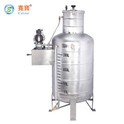
A printing solvent recovery unit is an environmental protection device specifically designed to treat waste organic solvents generated during the printing process, purifying and refining them through physical methods such as distillation for reuse.
Working principle: The core is distillation.
Its fundamental principle relies on the differences in boiling points among substances. Simply put, it is a "heating-cooling" cycle:
Heating and evaporation: Place waste solvents (such as car wash water, thinners, etc.) into a sealed heating tank and heat them. When the temperature reaches the solvent's boiling point, the solvent vaporizes into steam, while impurities such as ink, pigments, and resins remain in the tank due to their higher boiling points.
Condensation recovery: The solvent vapor generated is conveyed through pipes into the condensation system, where it is cooled and reconverted into liquid form.
Collection and Reuse: The final collected product is pure, reusable "new" solvent.
Main Types: Waste gas recovery and waste liquid recovery
Depending on the treatment target, it is primarily divided into two categories:
Exhaust gas recovery equipment: treats solvent-laden exhaust gases released into the air during the printing process. Typically employs adsorption methods (such as activated carbon adsorption) to capture solvents from the exhaust gas, followed by desorption and recovery.
Waste liquid recovery equipment: used to process liquid waste solvents generated from cleaning printing machines. The distillation method mentioned above is the most typical example and also the most common type available on the market.
Application in the printing industry: addressing the issue at its source
Printing is a major consumer of solvents and also a primary source of waste liquid.
Waste liquid sources: Primarily generated during the cleaning of printing machines, printing plates, ink tanks, and other equipment, such as wash water, plate cleaning solution, thinners, and paint thinner. These waste liquids are complex in composition and contain various organic compounds including toluene and ethyl acetate.
Application scenarios: Solvent recovery units are widely used in mainstream printing processes such as gravure, flexographic, and offset printing.
Jul 24, 2026
Analysis of Printing Solvent Recovery Machines
Send Inquiry
Product Categories
Latest Products