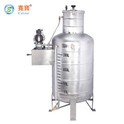
Butanone solvent recovery machine
I. Working Principle (Generally based on distillation / rectification principle)
Heating: The waste butanone solvent containing impurities is sucked into or pumped into the heating tank of the recovery machine.
Evaporation: By means of electric heating, steam heating or heat transfer oil, etc., methyl ethyl ketone (with a boiling point of approximately 79.6°C) is heated above its boiling point, causing it to evaporate from the waste liquid, while high-boiling-point impurities (such as resins, pigments, inks, plasticizers, etc.) remain in the residue.
Condensation: The evaporated methyl ethyl ketone vapor is cooled through a condensation system (typically using water-cooled or air-cooled condensers) and re-liquefied into high-purity liquid methyl ethyl ketone.
Collection: The purified methyl ethyl ketone after liquefaction flows into the recovery solvent collection tank, waiting to be reused in production.
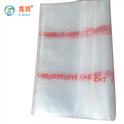
Sludge removal: The small amount of high-boiling-point residue remaining (usually a black viscous substance) needs to be regularly cleared and professionally treated as hazardous waste.
II. Key technical features of the equipment (for methyl ethyl ketone solvent)
Explosion-proof design: This is of paramount importance! Methyl ethyl ketone is a highly flammable and explosive liquid (with a flash point of only -6°C), and its vapor can form explosive mixtures with air. Therefore, the motor, electrical control system, sensors, etc. of the recovery machine must be designed in explosion-proof type in accordance with national standards (such as Ex d IIB T4), and be equipped with safety facilities such as fire dampers and pressure relief devices.
Material corrosion resistance: Methyl ethyl ketone has solubility for certain plastics. Therefore, the parts of the equipment that come into contact with the solvent (such as the inner tank, pipes, and condenser) are usually made of stainless steel (such as 304 or 316L) to ensure long-term stable operation.
High-efficiency condensation system: To enhance the recovery rate, an efficient condenser design is required to ensure that the methyl ethyl ketone vapor can be fully liquefied and recovered, minimizing volatile losses.
Precise temperature control: By using PLC or intelligent temperature controllers to precisely control the heating temperature, it can not only ensure the effective evaporation of methyl ethyl ketone but also prevent excessive heating that leads to energy waste or equipment damage.
Safety protection device:
Overload protection, over-temperature protection
Phase loss protection, dry burn protection
Level gauge (to prevent overflow)
Waste gas emission treatment (optional activated carbon adsorption, etc., for treating non-condensable gases)