Comprehensive Analysis of the Resin Glue Container Cleaning Liquid Recovery Machine
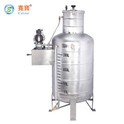
The resin pot cleaning liquid recovery machine is essentially an explosion-proof industrial solvent recovery device that employs distillation technology.
It is specifically designed to process contaminated solvents containing colloids, resins, and other impurities after use. Through a process of heating, vaporization, and condensation, it restores the solvent to a clear, pure state for reuse.
1. Core working principle: Distillation separation
The core mechanism relies on the difference in boiling points among various substances to achieve separation.
Heating and vaporization: The equipment seals the waste liquid and heats it until the solvent reaches its boiling point. At this stage, the solvent (such as thinner or acetone) evaporates into steam, while impurities like colloids, resins, and paint particles-having much higher boiling points-remain at the bottom of the tank as residue.
Cooling and liquefaction: High-temperature solvent vapor enters the condensation system (air-cooled or water-cooled), where it rapidly cools and reverts to liquid form.
Collection and Reuse: The purified liquid solvent is collected into dedicated containers, while impurities are safely discharged as residue.
2.Selection Criteria and Return on Investment Analysis
Key Considerations for Equipment Selection
Waste Liquid Analysis: Identify the chemical composition of the waste liquid (e.g., whether it contains toluene, acetone, ethyl acetate, alcohol, etc.), as equipment materials must be resistant to its corrosive properties.
Processing capacity and efficiency: Calculate the volume of waste liquid generated per day or per batch (liters/day). Select a machine with appropriate capacity based on processing volume, and ensure that the treatment time aligns with production schedules.
Recovery rate and purity: Recovery rates generally exceed 95%, with high-purity models achieving over 99%. The higher the precision requirements, the greater the price and operating costs.
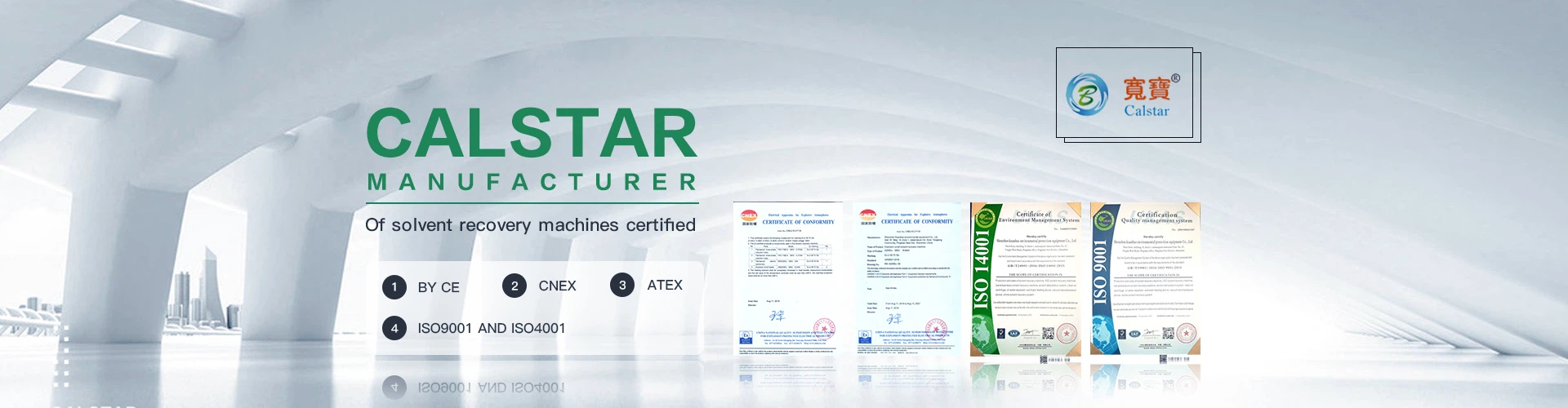
Explosion-proof rating: As mentioned above, equipment must be selected that has national explosion-proof certification.
Energy and Cooling: Compare the long-term operating costs of air-cooled and water-cooled models based on electricity prices and local climate conditions.
Automation and convenience: Decide whether basic manual control (batch type) or fully automatic PLC control (continuous type) is required. A tipping or bottom discharge design significantly affects ease of cleaning.
Budget and Return on Investment: Establish a total budget for equipment procurement and installation, and conduct a return on investment analysis.
After-sales service: Evaluate the supplier's capabilities in installation and commissioning, operation training, maintenance response, and spare parts supply.