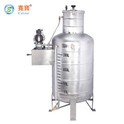
Hydrocarbon distillation recovery
Hydrocarbon distillation recovers and reutilizes components by exploiting differences in their boiling points through a cyclic process of heating, evaporation, and condensation, thereby separating and purifying used hydrocarbon solvents or mixtures to enable resource recycling. This is a core technology widely applied in both industrial and environmental protection fields.
Hydrocarbons are organic compounds composed solely of carbon and hydrogen, and they are the primary components of petroleum, natural gas, and their products such as gasoline and solvents. Distillation recovery mainly utilizes the differing boiling points of various substances to achieve separation.
1. Main Application Areas
This technology plays a crucial role across various industries:
Chemical and polymer production: Used for recovering large volumes of waste hydrocarbon solvents generated after cleaning equipment such as reaction vessels. Compared to direct incineration (typically at 700–1200°C), distillation-based recovery is carried out at ambient or moderate temperatures, offering a more energy-efficient and environmentally friendly solution.
Industrial Cleaning: In hydrocarbon cleaning machines and vacuum hydrocarbon cleaning systems, an integrated distillation recovery system enables on-site recycling of contaminated solvent containing oil residues from cleaned parts. After purification, the solvent is reused for cleaning, significantly reducing cleaning costs and waste liquid volume. A typical application includes cleaning automotive components and precision electronic products.
Oil and gas processing: In the petroleum refining industry, separating various useful components from crude oil or natural gas is a core process.
Natural gas liquids recovery: After removing water and acidic gases, natural gas undergoes cryogenic distillation to sequentially separate high-value natural gas liquids such as methane, ethane, propane, and butane.
Gasoline recovery: For volatile solvents such as gasoline, specialized gasoline recovery units are used to collect and reuse volatile gases or waste liquids.
Aromatic hydrocarbon recovery: Certain fractions of petroleum are rich in aromatic compounds such as benzene, toluene, and xylene, which can be extracted with high purity using specialized distillation methods like extractive distillation.
Waste plastic treatment and energy recovery: By using technologies such as pyrolysis, waste plastics can be converted into a mixed oil containing various hydrocarbons. Through distillation separation, this oil can yield chemical feedstocks or fuels like naphtha and diesel, enabling chemical recycling of plastics.
Other applications: In the dry cleaning industry, it is used to recover petroleum-based dry-cleaning solvents; in wastewater treatment, research has also been conducted on recovering organic hydrocarbons from wastewater for energy use.
2. Core technology: How is the technology implemented?
To improve recovery efficiency and safety, this technology has developed various advanced processes.
Core principle: The essence of distillation recovery lies in separation based on differences in boiling points.
Key Process:
Vacuum Distillation: This is one of the most critical technologies. By creating a negative pressure environment within the system, the boiling point of hydrocarbon solvents can be significantly reduced. For example, in industrial cleaning processes, this can lower the solvent's boiling point from approximately 172°C at atmospheric pressure to around 80°C. This approach offers two major advantages: ① enhanced safety (preventing fires or explosions caused by high temperatures), and ② energy savings (reducing the amount of energy required for heating).
Multi-stage distillation and recirculation system: To enhance recovery rate and efficiency, modern recycling systems employ a multi-stage (multi-tank) design. For example, a system may include a first distillation tank and a second distillation tank, enabling continuous distillation without shutdowns for waste residue cleaning, thereby improving overall processing capacity and recovery efficiency.