Paint Spray Solvent Recovery Machine
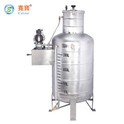
A solvent recovery unit for spray painting is an environmental protection device specifically designed to recover waste organic solvents (such as paint thinners, diluents, acetone, etc.) generated during spray painting, coating, and cleaning processes.
Its core principle involves distillation: heating waste solvent to vaporize its useful components, then cooling the vapor to condense it back into liquid form, thereby separating clean solvent. The entire process is similar to boiling dirty water and collecting pure distilled water.
Why does the paint industry need it?
Significant cost reduction: Recovered solvent can be reused for cleaning spray guns and other equipment, with recovery rates typically reaching 95% to 98%, greatly reducing the need to purchase new solvent.
?? Compliant with environmental regulations: Direct discharge of waste solvents severely pollutes soil and water sources. The recycling unit can reduce hazardous waste by up to 90%, helping businesses operate in compliance with regulations.
Achieving a circular economy: transforming waste into resources, aligning with the national promotion of green manufacturing and circular economy concepts.
What solvents can it process?
This type of recycling machine has a wide range of applications and can handle nearly all commonly used organic solvents in the paint spraying industry:
Aromatic hydrocarbons: thinner (banana oil), toluene, xylene.
Ketones: acetone, methyl ethyl ketone (MEK), cyclohexanone.
Esters: ethyl acetate, butyl acetate.
Alcohols: methanol, ethanol, isopropyl alcohol (IPA).
Others: dichloromethane, hydrocarbon solvents, gun cleaning fluid, etc.
Key Equipment Selection
The following main types are available on the market; selection should be based on comprehensive considerations:
By level of automation: divided into fully automatic (e.g., one-button operation, automatic slag feeding and discharging) and semi-automatic/manual types.
By cooling method: divided into air-cooled (easy to install) and water-cooled (higher cooling efficiency).
By technical configuration: divided into standard type and vacuum pressure-reduced type. The latter performs distillation under negative pressure, which lowers the boiling point, enhances safety, and increases recovery speed.
When selecting equipment, you can focus on the following key indicators:
Processing capacity: the amount of waste solvent that can be handled in a single operation, typically ranging from 10 liters to 600 liters.
Heating and Temperature Control: Typically uses indirect heating with thermal oil, equipped with a PID temperature control system to ensure precise temperature regulation.
Material and Safety: Components in contact with solvents are mostly made of 304 stainless steel. The equipment must be explosion-proof and certified with a national explosion-proof qualification. Safety features such as over-temperature, over-pressure protection, and automatic shutdown are also essential.
Recycling quality: The solvent produced by high-quality recycling units is clear and true in color, meeting purity requirements for cleaning and other processes.