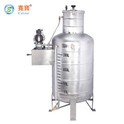
Problems and Faults in Ethyl Acetate Distillation Equipment
Common Problems and Faults Handling
Low yield or purity: This is usually due to incomplete purification of the crude product (failure to effectively remove acids, alcohols, and water), or improper control of operating conditions (such as temperature fluctuations, improper reflux ratio).
Boiling over during distillation: This often occurs because the boiling stone was not added before distillation, or it was added after boiling, causing the liquid to spray violently. It is essential to add it before heating, and if it is forgotten after heating, it must be cooled before adding.
Equipment corrosion: This is usually a problem caused by the use of concentrated sulfuric acid as a catalyst in industrial applications. Currently, by using solid acid catalysts (such as ion exchange resins), it can fundamentally alleviate the problem.
Industrial Scale and Technological Development
The modern ethyl acetate industry is developing towards more efficient and greener directions, with key trends including:
Process intensification: Combining the reaction and separation in one tower. It can simultaneously disrupt the reaction equilibrium and increase the conversion rate, significantly saving investment and simplifying the process. By applying software such as Aspen Plus for simulation, process parameters can be optimized and energy consumption can be reduced.
Energy saving and consumption reduction: Promoting the combination of adjacent towers and pressure difference heat coupling technology, using the top steam of the tower to heat the bottom material of the tower, achieving significant energy savings; at the same time, using heat pump technology to recover the condensation heat at the top of the tower can significantly reduce the total process cost.
Green alternatives: Using solid acid catalysts (such as cation exchange resins) instead of traditional concentrated sulfuric acid, eliminating corrosion and the large amount of waste acid pollution at the source, achieving green production.