Trichloroethylene recovery device
The trichloroethylene recovery unit is similar to the NMP and alcohol recovery systems, with the core also being distillation. However, due to its extreme toxicity and high volatility, the requirements for safety, sealing, and environmental protection in this device are much stricter. This is usually an important part of its cost.
Physical properties and recovery principles
Boiling point: approximately 86.7℃.
Recovery principle: The process of distillation is utilized to recover trichloroethylene by taking advantage of its significantly lower boiling point compared to water and other common impurities (such as oil stains, asphalt, and resins). Heating causes trichloroethylene to evaporate, which is then condensed and collected. The high-boiling-point impurities remain at the bottom of the container, achieving separation. This fundamental principle determines that the device mainly consists of three major parts: heating, condensation, and collection.
Core process and key equipment
The recovery technology route of trichloroethylene is clear. There are mainly the following several methods, and the device can also be divided into two major categories: integrated type and split type:
Simple Distillation Recovery Device
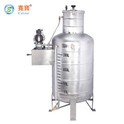
This is the most basic recovery device. The waste liquid is added to the kettle, and indirect heating is carried out using electric heating or hot oil. The generated trichloroethylene vapor is condensed and collected. Integrated devices such as Huabao B60Ex have a feeding capacity of 60L and a recovery rate of approximately 95%. This technology is suitable for small enterprises or situations with a small amount of waste production. It is simple, direct, and has a lower cost.
Adsorption-Distillation Combined Device
For gaseous or low-concentration waste gas, first use adsorbents such as activated carbon to capture trichloroethylene, and then heat it with hot air (or steam) for desorption. The high-concentration gas obtained after desorption is condensed to recover the liquid. Industry standards such as JTG 3410-2025 require that centrifugal extraction instruments and other equipment have an adsorption efficiency of ≥ 99%. This solution is suitable for waste gas treatment.
Cleaning machine online recycling system
This is an integrated closed-loop system highly integrated with the cleaning production line. On the cleaning machine production line, the dirty liquid is filtered, distilled, and condensed for recycling, and then directly sent back to the cleaning tank for reuse. It adopts a fully enclosed and automatic circulation design, which can significantly reduce solvent loss and hazardous waste generation. The initial investment is relatively large, but it is suitable for large-scale, continuous, and precision cleaning production lines.
May 26, 2026
Trichloroethylene recovery device
Send Inquiry
Product Categories
Latest Products