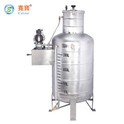
Plastic coating and composite (such as the production of adhesive tapes, protective films, functional films, label materials, etc.) are typical solvent based processes that extensively use organic solvents such as ethyl acetate, toluene, butanone, DMF, etc. The application of solvent recovery machines can bring significant benefits in various aspects.
1, Overview of Core Benefits
The most direct benefits of using a solvent recovery machine are significantly reducing solvent procurement costs, significantly reducing hazardous waste treatment expenses, and meeting increasingly strict environmental regulations, ultimately achieving a win-win situation for economic and environmental benefits.
2, Detailed description of specific benefits
1. Significant economic benefits - direct cost reduction and revenue generation
Reduce raw material costs: The purity of the recovered solvent can reach 95% -99.9%, which can be directly reused in production lines, replacing most fresh solvent purchases. The cost of solvents is usually one of the main variable costs for such factories, and every one percentage point increase in recovery rate means a significant increase in profits.
Significantly reducing the cost of hazardous waste treatment: Waste solvents are classified as hazardous waste (HW06), and the treatment costs are high (including treatment fees, transportation fees, and management fees). After using the recycling machine, the vast majority of waste solvents are "resourceful" rather than "waste", and the amount of hazardous waste generated can be reduced by more than 90%, resulting in a cliff like decrease in processing costs.
Fast investment return cycle: Although there is an initial investment in equipment, for enterprises with high solvent usage, the cost can usually be recovered within 1-3 years through the saved solvent procurement and hazardous waste treatment fees, and the recovered solvents are almost equivalent to "zero cost" raw materials.
2. Improve production safety and stability
Reduce the risk of hazardous waste storage in the factory area: The large amount of waste solvents temporarily stored in the factory area is a major safety and environmental hazard (fire, leakage). The recycling machine reduces the storage capacity and time of hazardous waste, directly reducing safety risks.
Ensuring supply chain stability: Reliance on recycled solvents reduces dependence on the fresh solvent market with volatile market prices. Even when the supply of purchased solvents is tight or prices skyrocket, production can remain relatively stable.
Improve production closed-loop: Some high-quality recycled solvents can be directly reused, forming a "micro circulation" within the factory area, reducing dependence on external logistics and processing links, and making the production process more controllable.
3. Potential space for process optimization
Accurate solvent consumption measurement: The operational data of the recovery system (such as recovery amount and concentration) can be used to accurately calculate the actual solvent consumption in production, providing precise data support for process optimization, cost accounting, and material balance.
Promoting process improvement: Monitoring the purity of the recovered solvent can be fed back to the front-end coating process, driving adjustments to the formula or process parameters to achieve better recovery efficiency and product quality.
For plastic coating and composite enterprises, investing in solvent recycling machines is not only an environmental expense, but also a high return strategic investment.
Therefore, in today's increasingly competitive industry and normalized high-pressure environmental protection, adopting solvent recovery technology has become a standard configuration and key measure for sustainable development of leading enterprises in the industry.