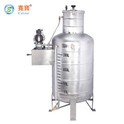
The benefits of using solvent recovery machines (also commonly referred to as solvent recovery systems or distillation recovery systems) in the pharmaceutical industry are multifaceted, not limited to economic benefits, but also covering key areas such as environmental protection, safety, compliance, and operational efficiency.
1, Economic benefits (the most direct and significant driving factor)
1. Significantly reduce the cost of raw material procurement:
·In pharmaceutical synthesis, extraction, cleaning and other processes, high-purity solvents (such as methanol, ethanol, acetone, dichloromethane, ethyl acetate, etc.) are used in large quantities and are expensive.
·The recycling machine can purify used waste solvents to a standard close to that of new solvents and directly reuse them in the production process. This means that companies only need to invest once to recycle the same batch of solvents multiple times, greatly reducing the purchase of new solvents.
2. Significantly reduce the cost of waste solvent treatment:
·Waste solvents are classified as hazardous waste, and their disposal costs are very high. The processor usually charges based on the type, quantity, and concentration of the solvent.
·By recycling, the volume of waste solvents can be reduced by 80% -95%, which means that the amount of hazardous waste that needs to be paid for processing has sharply decreased, thereby saving huge waste disposal costs.
3. Fast return on investment:
·Due to the significant savings in procurement and processing costs, the investment cost of a solvent recovery machine can usually be recovered within 6 months to 2 years. The income generated afterwards is almost pure profit, which is an extremely attractive investment project for enterprises.
2, Safety benefits
1. Reduced the amount of waste solution that needs to be stored and transported within the factory area, and reduced the risks of fire, explosion, and health caused by leaks, volatilization, etc.
·Modern recycling systems are typically enclosed and automated, reducing the opportunity for operators to come into direct contact with hazardous chemicals.
2. Reduce transportation risks:
·Whether it is the purchase of new solvents or the transportation of waste solvents, there are safety risks during the transportation process. The recycling machine reduces the logistics demand in these two aspects, thereby reducing the potential risk of accidents in the supply chain.
3, Operational and supply chain benefits
1. Ensure production continuity:
·Achieving self-sufficiency in key solvents reduces reliance on upstream suppliers and avoids the risk of production stagnation caused by supply chain disruptions such as price fluctuations, transportation delays, and shortages.
2. Simplify inventory management and storage space:
·The amount of new solvents that enterprises need to reserve and the amount of waste solvents temporarily stored have been greatly reduced, thereby freeing up valuable storage space and simplifying inventory management and logistics arrangements.
3. Improve process control and consistency:
·A high-quality recycling machine can precisely control the purity and quality of the recovered solvent, ensuring that it stably meets the production process requirements, sometimes even more consistent than the quality of new solvents from different batches, which is conducive to ensuring the uniformity and stability of the final drug quality.
For the pharmaceutical industry, introducing solvent recovery machines is not just a passive choice for "waste treatment", but an active investment that integrates cost control, risk management, strategic development, and brand image enhancement.
Therefore, in modern pharmaceutical companies, solvent recovery machines have become one of the essential key equipment for achieving sustainable development and lean production.
The following is the customer site