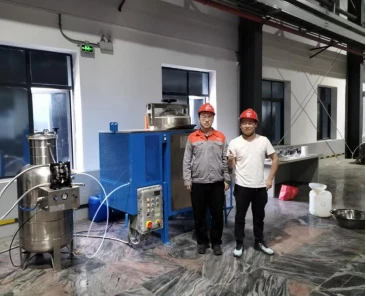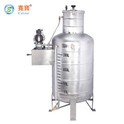
Stamping part cleaning primarily removes stamping oil, stretching oil, rust preventive oil, and metal iron debris. The waste solvent generated during cleaning is distilled and regenerated by a solvent recovery machine, then recycled for use in the cleaning process. Specific advantages include:
1. Reduce the procurement cost of cleaning agents
For large quantities of stamped parts, the cleaning solvent consumption is substantial. The waste solvent undergoes distillation, separating oil contaminants and metal powders to yield clean solvent for recycling. This significantly reduces the need for new solvent procurement, leaving only minimal residual sludge. Long-term usage leads to a notable decrease in consumable costs.
2. Stabilize cleaning quality and reduce downstream defects
Repeatedly reusing dirty solvents can leave oil stains and films on the surface of stamped parts, leading to issues such as paint peeling, poor adhesion in subsequent processes like spraying, electrophoretic coating, and baking. Recycled clean solvents maintain stable cleaning performance, ensuring a clean and uniform surface on the workpieces, thereby reducing the rate of rework and scrap.
3. Reduce hazardous waste and save disposal costs
Cleaning waste solvents are classified as hazardous waste, with high disposal costs. The solvent recovery machine recovers the majority of solvents, generating only small amounts of oily residue, significantly reducing the total volume of hazardous waste. This directly lowers the costs of outsourcing hazardous waste treatment and meets the requirements for hazardous waste minimization in environmental protection.
4. Improve Workshop Site and Safety
The stamping workshop has excessive accumulation of workpieces and waste liquid drums, with strong solvent fumes posing safety hazards. On-site equipment is used to treat waste liquids, significantly reducing the storage of large quantities of solvent drums, minimizing solvent volatilization losses, and improving workshop odors. Explosion-proof models are selected to comply with safety production standards for the stamping workshop.
5. Improve the efficiency of the production line
There is no need to frequently transport large amounts of new solvents or wait for hazardous waste companies to collect spent liquid. Regenerated solvents can be continuously supplied to cleaning equipment, ensuring uninterrupted production in the stamping part cleaning production line, making it suitable for large-scale stamping component manufacturing.
6. Environmental Safety Supervision Compliance
Reduce VOC emissions, treat waste liquids on-site, prevent random dumping of waste liquids, and address environmental and safety inspections to avoid penalties for non-compliance.