Analysis of Solvent Recovery Vacuum System
The solvent recovery vacuum system is a complete set of equipment that creates a negative pressure environment to lower the boiling point of solvents, thereby achieving low-temperature and efficient separation and recovery of solvents. It is a key link in energy conservation, emission reduction, and resource recycling in the chemical and pharmaceutical industries.
Core Working Principle and Composition
The working principle of this system is based on the physical law that the boiling point of substances changes under different pressures. The core working process is as follows: Under the action of the vacuum pump, the internal pressure of the system decreases, and the boiling point of the solvent drops accordingly; the solvent is vaporized at a low temperature through external heating; the vaporized solvent vapor then enters the condensation system, where it is cooled and condensed back into liquid for recovery.
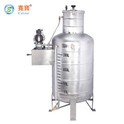
A typical solvent recovery vacuum system mainly consists of the following components:
Vacuum pump (core equipment): It is responsible for establishing and maintaining the vacuum degree of the system and is the "heart" of the entire system. According to the process requirements and technical routes, there are various types to choose from.
Condensation system: It includes a condenser and a receiving tank, which are used to cool and condense gaseous solvents into liquid form and store them. The condensation efficiency directly determines the solvent recovery rate.
Control System: By integrating PLC (Programmable Logic Controller) and other components, it can monitor in real time and precisely adjust core parameters such as vacuum degree, temperature, and pressure, ensuring the stable and efficient operation of the system.
Technical Advantages and Challenges
Core Advantages:
Significant economic benefits: Waste solvents can be recycled and reused, significantly reducing the cost of raw material procurement. For instance, a certain chemical enterprise saves over one million yuan annually by recovering solvents through a vacuum system.
Safety and environmental protection: Low-temperature operation reduces the risk of fire and explosion of flammable solvents (such as hydrocarbon solvents); meanwhile, closed-loop recovery reduces VOCs (volatile organic compounds) emissions, which is conducive to environmental compliance.
Product quality improvement: Low-temperature evaporation can effectively protect heat-sensitive materials and prevent them from deteriorating due to high-temperature decomposition.
Facing Challenges:
Investment and operating costs: High-end equipment such as dry screw pumps have a relatively high initial investment; the operation of vacuum pumps and the consumption of cooling water also bring about continuous operating costs.
Complexity in process compatibility: The system design and parameters (such as vacuum degree and temperature) need to be precisely matched according to the solvent characteristics and process requirements. Improper design can lead to low recovery efficiency. Application scenarios
Solvent recovery vacuum systems are widely used in multiple industries such as chemical engineering, pharmaceuticals, and food processing, and are an indispensable part of many production processes. According to market data, the application of this system in fields such as petrochemicals, Chinese and Western medicines, coatings and paints, and plastics accounts for the majority share.