The working principle of the thinner recovery machine
Working Principle
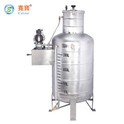
The working principle of the thinner recovery machine is based on distillation and the process is very simple:
Heating: The machine heats the waste thin paint to its boiling point (usually between 80 and 200 degrees Celsius).
Vaporization and separation: When the thinner is heated, it turns into vapor, while the solid impurities such as paint and resin, which have higher boiling points, remain at the bottom of the bucket as residue.
Condensation and collection: The thinning agent vapor enters the condensation system through pipelines, liquefies into pure liquid upon cooling, and eventually flows into the recovery bucket, resulting in a "brand new" thinning agent.
This process achieves solid-liquid separation, and the entire working process is carried out under normal pressure or slight negative pressure, which is safe and controllable.
Core Value
Significant economic benefits: This is the most direct driving force. The cost of recycling one liter of thinner is much lower than purchasing new thinner. According to an estimate, at a thinner price of 8 yuan per liter and a recovery rate of 90%:
Processing 10 liters of waste thin paint every day can save approximately 21,600 yuan annually.
Processing 100 liters of waste thin paint every day can save approximately 216,000 yuan annually.
Excellent environmental benefits: It effectively reduces the direct discharge of toxic and harmful waste solvents, protects soil and water sources, and meets the requirements of environmentally friendly production.
Applicable industries and solvents
The thinners recovery machine has a very wide range of applications and can be used in almost all industries that use organic solvents for cleaning.
Main industries: automotive manufacturing and repair (cleaning spray guns, pipelines), electronic product production (cleaning circuit boards), furniture manufacturing, printing industry (cleaning printing plates), hardware and plastic products, sports equipment manufacturing, etc.
Types of recyclable solvents:
Aromatic hydrocarbons: toluene, xylene, etc.
Ketones: acetone, methyl ethyl ketone, etc.
Esters: ethyl acetate, n-butyl acetate, etc.
Alcohols: methanol, ethanol, isopropanol, etc.
Others: denatured alcohol, banana water, circuit board cleaning solution, hydrocarbon cleaning agent, etc.